
Introduction
Artificial Intelligence continues to evolve at a steady pace. What once seemed experimental is now part of business operations, education, healthcare, and daily routines. As computing power grows and data becomes more available, AI systems gain new capabilities.
Understanding future AI trends helps individuals, companies, and organizations prepare for upcoming changes. This article explores key directions AI is moving toward and how these developments may shape work, communication, and technology.
Expansion of Generative AI
Generative AI creates text, images, audio, and video.
Current systems already support:
- Content writing
- Image generation
- Music creation
- Code assistance
Future versions will become more integrated into workplaces. Businesses will use generative AI for reports, design drafts, training materials, and customer communication.
This trend will reduce production time across many fields.
AI Becoming Part of Every Application
AI will no longer exist as separate tools. Instead, it will be built into most software.
Examples include:
- Office programs with AI editing
- Accounting platforms with forecasting
- Email systems with response suggestions
- Browsers with search assistance
Users will interact with AI without opening separate applications.
Growth of AI Assistants
AI assistants will expand beyond basic tasks.
Future assistants will help with:
- Project planning
- Meeting summaries
- Research organization
- Task prioritization
They will operate across devices and platforms, creating connected workflows.
Increased Automation in Business
Companies will automate more operations.
AI will manage:
- Inventory levels
- Customer onboarding
- Invoice processing
- Marketing campaigns
This will reduce manual work and allow teams to focus on strategy.
Small businesses will gain access to automation once limited to large enterprises.
AI in Healthcare Monitoring
Healthcare AI will focus on early detection and continuous monitoring.
Expected uses include:
- Remote patient tracking
- Predictive risk analysis
- Treatment planning
- Medical documentation
Wearable devices and health apps will collect data that AI systems analyze for signs of concern.
AI and Personalized Education
Education platforms will adapt learning paths for each student.
AI systems will:
- Track progress
- Identify knowledge gaps
- Recommend lessons
- Adjust difficulty levels
Students will receive instruction based on individual needs rather than standard schedules.
Rise of AI Agents
AI agents are systems that complete tasks independently.
These agents will:
- Book appointments
- Manage schedules
- Compare prices
- Handle customer requests
Instead of responding only to commands, AI agents will act on goals set by users.
Integration of AI with Robotics
Robots combined with AI will enter more industries.
Applications include:
- Warehousing
- Agriculture
- Manufacturing
- Healthcare support
These systems will perform physical tasks guided by data and sensors.
AI and Natural Language Interaction
Communication with machines will become more natural.
Future AI will better understand:
- Context
- Tone
- Intent
Voice and text interaction will feel closer to human conversation.
This will improve accessibility for people of all ages.
Growth of Edge AI
Edge AI processes data directly on devices instead of cloud servers.
Benefits include:
- Faster response
- Reduced internet dependence
- Better privacy
Smartphones, cameras, and home devices will use edge AI for local decision making.
Stronger Focus on AI Regulation
Governments will introduce more AI policies.
Areas of regulation include:
- Data usage
- Algorithm transparency
- User rights
- Accountability
Companies will need to follow guidelines to ensure responsible AI development.
Demand for Explainable AI
Businesses and users want to understand how AI makes decisions.
Explainable AI focuses on clarity.
Systems will provide reasons for outcomes such as:
- Loan approvals
- Medical recommendations
- Hiring suggestions
This improves trust and accountability.
AI in Cybersecurity
Cyber threats continue to grow.
AI will play a larger role in:
- Threat detection
- Risk assessment
- Incident response
Security platforms will use behavior analysis to identify attacks faster.
AI and Creative Industries
Creative professionals will use AI as a support tool.
Applications include:
- Video editing
- Music production
- Graphic design
- Writing drafts
AI will assist with early-stage creation while humans guide final output.
Increased Demand for AI Skills
More jobs will involve AI tools.
Skills in demand include:
- Data literacy
- Prompt design
- System evaluation
- Workflow automation
Even non-technical roles will require basic AI understanding.
Ethical AI Development
Organizations will focus on fairness and safety.
This includes:
- Reducing bias
- Protecting privacy
- Ensuring responsible deployment
Ethical frameworks will guide future AI projects.
AI in Smart Cities
Cities will use AI to improve services.
Examples:
- Traffic management
- Energy usage
- Waste collection
- Public safety
Sensors and analytics will support urban planning.
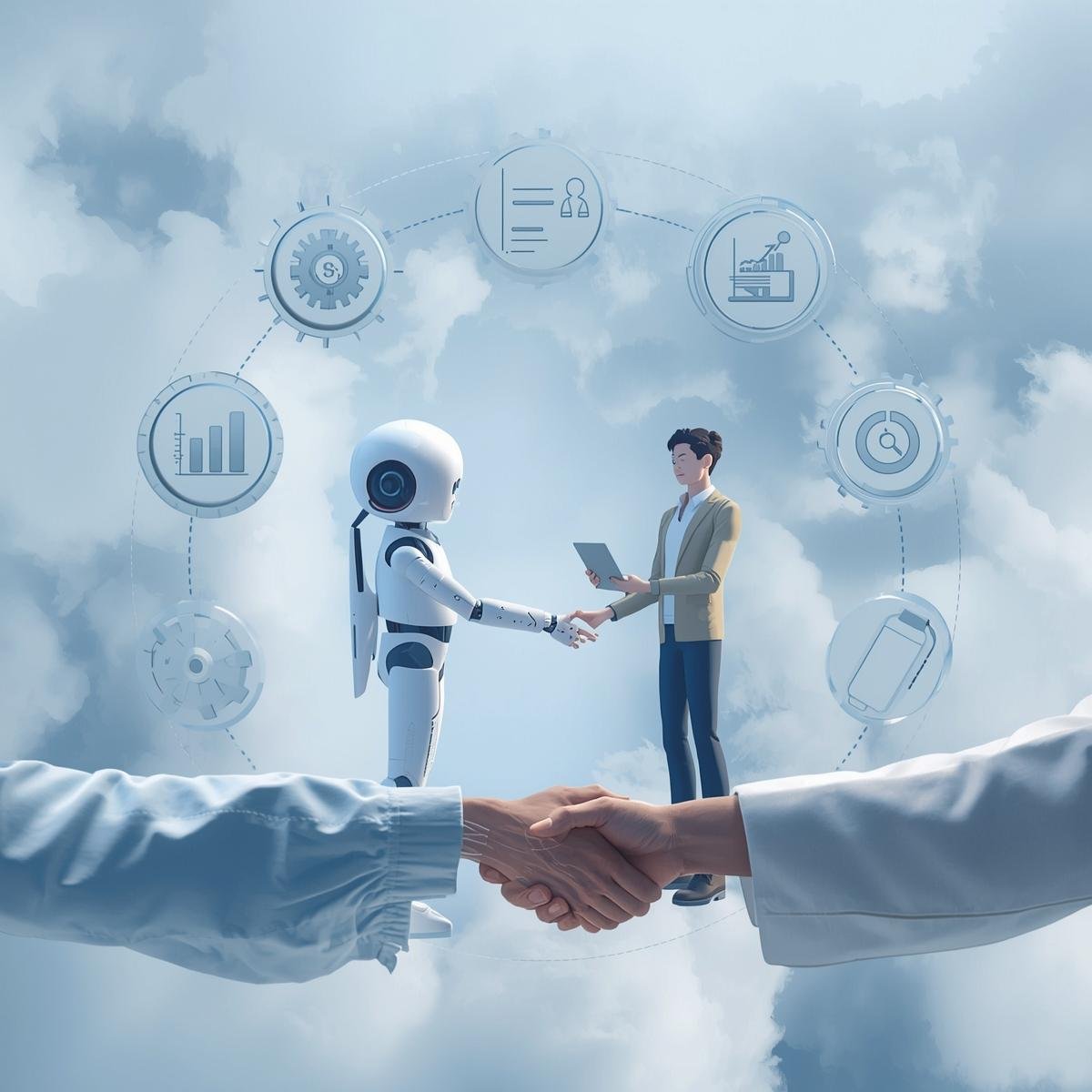
Collaboration Between Humans and AI
AI will not replace humans entirely.
Instead, collaboration will increase.
People will handle strategy, creativity, and judgment. AI will manage data processing and automation.
This partnership will define future workplaces.
Challenges Ahead
Despite progress, challenges remain:
- Data quality issues
- Security risks
- Skills gaps
- Infrastructure demands
Addressing these issues requires coordination between governments, businesses, and educators.
Preparing for the Future of AI
Individuals and organizations can prepare by:
- Learning basic AI concepts
- Testing AI tools
- Updating policies
- Investing in training
- Monitoring industry changes
Early adoption supports long-term success.
Conclusion
The future of Artificial Intelligence points toward deeper integration into daily life and business systems. From automation and healthcare to education and cybersecurity, AI will continue to influence how tasks are completed and decisions are made.
Trends such as generative AI, AI agents, edge computing, and explainable systems show that technology is moving toward accessibility and transparency. While challenges exist, responsible development and informed use will shape positive outcomes.
Artificial Intelligence is not a distant concept. Its future is already unfolding.